What is a stock?
A slice of a company, a price that moves every second, rights and a risk. The essentials in three minutes.

Why companies sell shares
To grow, a company needs money. It can borrow it, or bring in new partners by selling them a part of its capital. When it lists on the stock exchange, those shares become tradable by anyone: they can be bought and sold on every trading day.
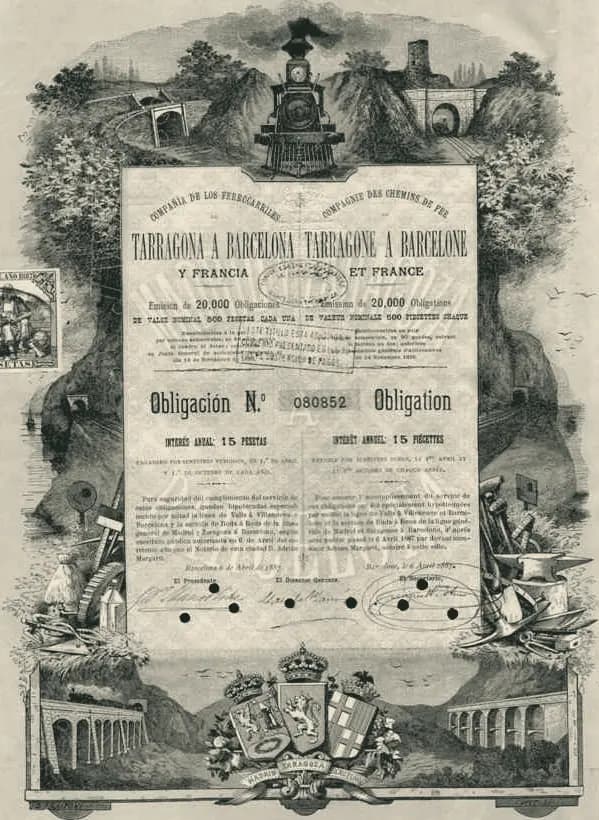
The idea is old. In 1602, the Dutch East India Company sold its shares to thousands of savers in Amsterdam, who could then trade them with one another. It is often seen as the birth of the stock market.
What a share gives you
- A share of the profits, when the company decides to pay them out: this is the dividend.
- A vote at general meetings, usually one vote per share.
- A share of the company’s value: if it grows and earns more, its share price tends to rise.
A stock is not a bond. A bond is a loan: the company promises to pay interest and to repay on a set date. A stock promises nothing. It pays more on average over the long run, precisely because it is riskier.
How the price forms
A stock’s price is simply the price of the last trade. If more people want to buy than to sell, buyers have to offer more, and the price rises. In the opposite case, it falls. Company results, news, interest rates and the general mood shift this balance all the time.
Multiply the price by the total number of shares and you get the market capitalisation: what the market thinks the whole company is worth, at that moment.
What you risk
The worst case is bankruptcy: the share can then fall to zero. But your loss stops there, at the amount invested. That is why you avoid putting everything on a single stock, and often prefer a basket of shares, such as an index or an ETF.
Educational content, not investment advice.
Also worth reading
Explainer · 3 min read
What is a dividend?
The share of profits that goes back to shareholders. Income, but not a gift: the price drops by about as much on the ex-dividend date.
Read the explainer →
Explainer · 3 min read
What is a stock market index?
A single number to say how a market is doing. But not all indices are calculated the same way.
Read the explainer →
11 min read
What to know before you start trading
Before you place your first order, a handful of concepts make all the difference between learning and losing. Here they are, without jargon, with the numbers that matter.
Read the article →