What to know before you start trading
Before you place your first order, a handful of concepts make all the difference between learning and losing. Here they are, without jargon, with the numbers that matter.

Trading means buying and selling financial assets (stocks, indices, commodities, currencies, cryptocurrencies) in the hope of profiting from their price changes. The idea is simple; the practice is much less so. Before your first order, you need to understand what a price is, how risk always comes with return, what fees really cost, and why your own brain is often your worst adviser.

Trading, investing, speculating: three different things
The three words are often used interchangeably. Yet they describe distinct approaches, which require neither the same time nor the same temperament.
- Investing means buying a share of a company, a bond or an index to hold for years, relying on growing profits, dividends or interest.
- Trading means acting over shorter periods, from a few minutes to a few weeks, to take advantage of price movements rather than long-term value.
- Speculating means betting on a specific price move, often with concentrated positions or leverage. Every trade involves some speculation.
The difference matters, because the rules change with the time horizon. Over ten years, a stock usually follows the health of the company. Over a single day, its price depends mostly on market mood, news and chance.
What a price really is
A price is not the “value” of a company. It is the price at which the last trade took place between a buyer and a seller. At any moment, the order book shows two prices: the best price offered by buyers, and the best price asked by sellers.
Two order types are enough to get started. A market order executes immediately, at the best available price, whatever it is. A limit order sets a maximum price when buying, or a minimum when selling: it protects you from a bad price, but may never be filled.
In PastFolio, orders fill at the session’s closing price, the last price of the day. It is the reference price used by newspapers, indices and funds.
The order book
Return never comes without risk
This is the most important rule in finance: a higher expected return is always paid for with higher risk. An investment that promises a lot with no risk is almost always a scam.
Major stock indices have historically had a volatility of around 15 to 20% a year. A single stock is usually more volatile, and a cryptocurrency such as bitcoin is often two to four times more volatile than an index. The higher the volatility, the deeper temporary losses can be, and that is where arithmetic becomes cruel.
Losing, then climbing back
A loss and a gain of the same percentage do not cancel out: after −50%, you need to double your money to get back to where you started. This is why experienced traders think about limiting losses first, before trying to maximise gains.
Diversify: don’t bet everything on one stock
A company can flop a product, lose a lawsuit or go bankrupt. This company-specific risk shrinks considerably when you spread your capital across several securities, from different sectors, countries and asset classes. Bad surprises from some are then partly offset by good surprises from others.
Diversification has a limit: it does not protect against market risk, the kind that hits everyone at once. In 2008 or in March 2020, almost all stocks fell together. Mixing assets that react differently (stocks, bonds, gold, currencies) cushions these shocks better than piling up similar stocks.
One stock, or a basket
Fees, the slow poison
Every order has a cost: brokerage fees, the spread, sometimes taxes. Taken one by one, they look tiny. Added up, they become one of the main causes of underperformance, especially for those who trade a lot.
A simple example: with 0.1% in fees to buy and 0.1% to sell, a round trip costs 0.2% of the amount traded. A hundred round trips a year on your whole capital, and 20% of your capital goes on fees, before the first gain. Over the long run, an extra 1% in annual fees is enough to shrink your final capital by about a quarter after thirty years.
In the game, every order pays brokerage fees, and the order ticket shows them before you confirm. It is a good way to feel how much trading frequency weighs on your results.
10,000 over 30 years
Short selling: profiting from a fall
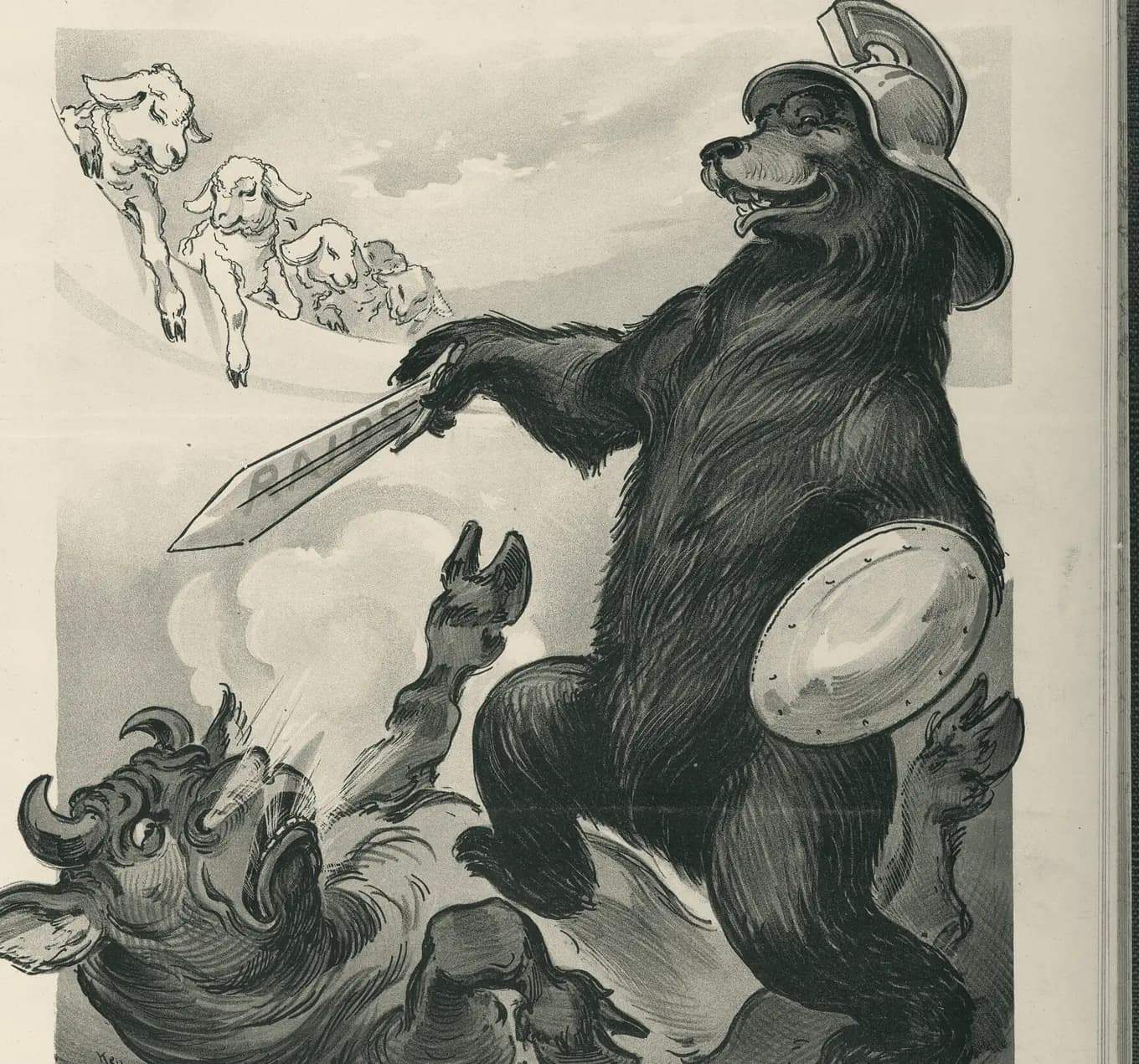
Short selling is useful: it lets you bet against a stock you find overpriced, or hedge a portfolio. But its risk profile is reversed. When you buy, the maximum loss is your stake: a security cannot be worth less than zero. When you short, the maximum gain is 100% (if the security falls to zero), while the loss has no ceiling: a price can double, triple, or more.
When many short sellers have to buy back at the same time, their purchases push the price even higher: this is a short squeeze. In January 2021, GameStop stock rose more than tenfold in a few weeks, partly for this reason, inflicting heavy losses on short sellers.
This is why the proceeds of a short sale stay locked as collateral, and a minimum margin is required. PastFolio applies the same logic: your net value must cover half of your short positions.
Buying or selling short
Leverage and the risk of ruin
Leverage means committing more money than you have, by borrowing. With 10× leverage, a 1% rise earns you 10%… and a 10% fall wipes out your entire stake. Beyond that, the broker demands more funds (a margin call) or closes your position automatically, at the worst possible moment.
Leverage does not change the quality of a decision; it only changes how fast you win or lose. For a beginner, it turns ordinary mistakes into irreversible losses. European regulators actually require CFD brokers, who sell highly leveraged products, to display the share of retail accounts that lose money: it is often above 70%.
Your worst enemies: your own biases
Behavioural finance has shown it since the work of Daniel Kahneman and Amos Tversky: we do not decide like calculators. A few biases keep coming up among traders.
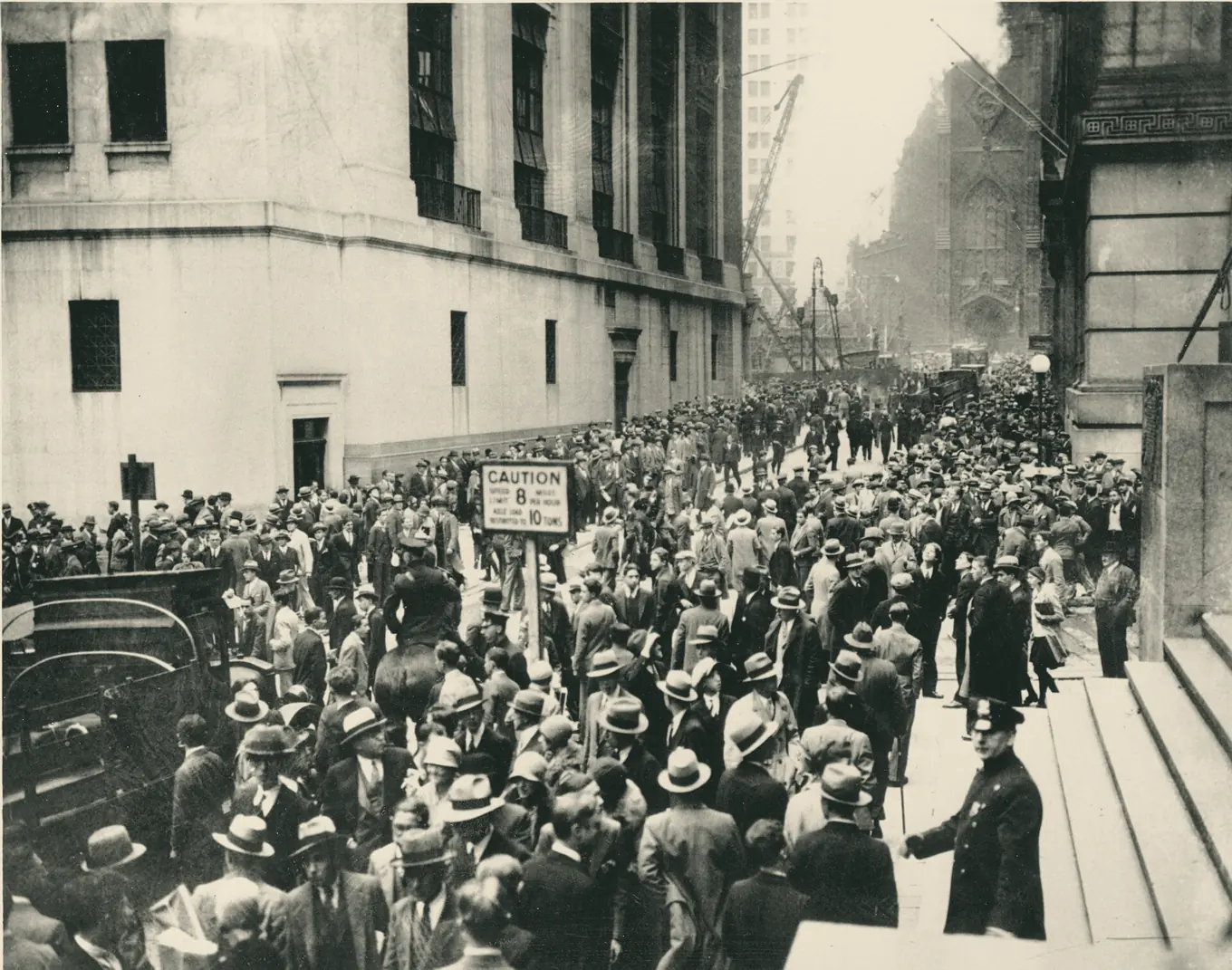
- Loss aversion: a loss hurts roughly twice as much as an equivalent gain pleases. So we hold on to losing positions “until they come back”.
- The disposition effect, its corollary: selling winners too early and losers too late.
- Overconfidence: a few successes are enough to feel smarter than the market, and to raise the stakes.
- Fear of missing out: buying what has just risen sharply, often close to a peak.
- Confirmation bias: only paying attention to information that proves your position right.
The best remedy is method: decide your rules in advance (position size, exit threshold, reasons to buy), write them down, and reread them before every order.
Practise before you risk money
No pilot learns on a passenger jet. A simulator lets you make your mistakes without paying for them: feel the effect of fees, watch a concentrated portfolio dive, see a short position get out of hand, and measure your decisions by their return.
PastFolio is built on a rule that keeps the exercise honest: you replay the past with real prices, but you never see tomorrow. You cannot use what we know today; you decide with the information of the moment, like an investor at the time. A good way to test your rules before applying them for real, and to discover your own temperament when markets rise and fall.
Educational content, not investment advice.
Also worth reading

7 min read
How much money do you need to start investing in stocks?
You can open an account with almost nothing. But the right amount depends less on a figure than on a few rules: money you can spare, fees, and how to avoid betting everything on one stock.
Read the article →8 min read
Why most retail traders lose money
The ads show winners; the research shows a large majority of losers. The causes are known, measured, and mostly avoidable.
Read the article →
7 min read
When should you sell a stock? The good and bad reasons
Buying is easy; selling forces a decision. Studies show that individuals sell their winners too early and hold their losers too long. Here is how to decide with a cool head.
Read the article →